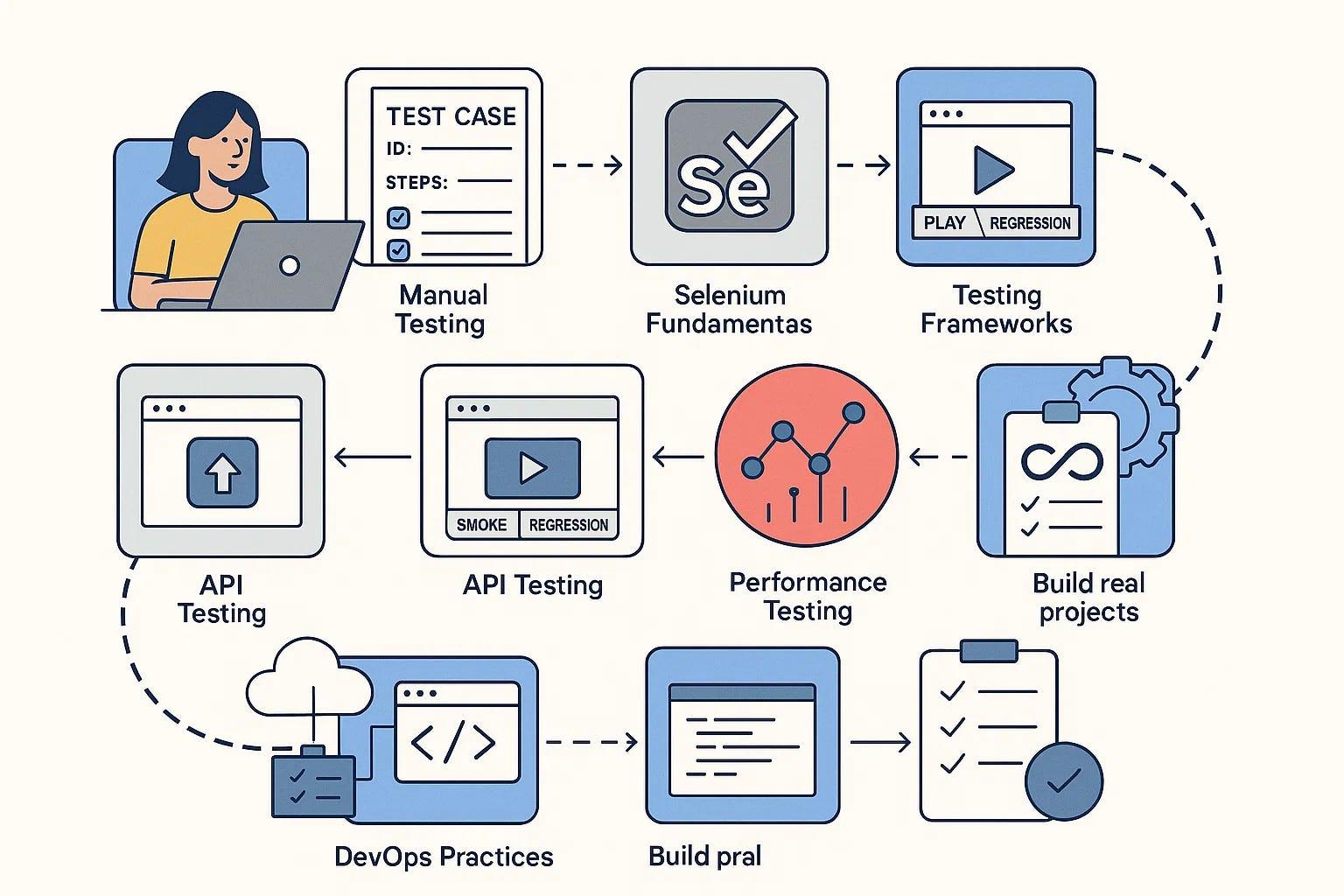
Selenium is one of the most popular tools used in automation testing. However, to learn Selenium effectively, beginners need to develop certain skills. These skills help in understanding concepts faster and applying them in real-world projects.
In this blog, we will explore the essential skills required to learn Selenium and how beginners can build them step by step.
Basic Understanding of Software Testing
Before learning Selenium, it is important to understand the fundamentals of software testing. This includes:
- Test cases and test scenarios
- Bug reporting
- Testing lifecycle
Having a strong foundation in manual testing helps in writing better automation scripts.
Programming Knowledge
Selenium requires coding skills. Beginners should learn at least one programming language such as:
- Java
- Python
- JavaScript
Focus on basics like:
- Variables
- Loops
- Conditional statements
- Functions
Programming is the backbone of automation testing.
Understanding of Web Technologies
Since Selenium is used for web applications, knowledge of web technologies is essential. Learn:
- HTML structure
- CSS basics
- DOM (Document Object Model)
This helps in identifying elements on web pages using locators.
Knowledge of Selenium Concepts
Once the basics are clear, start learning Selenium concepts such as:
- WebDriver
- Locators (ID, XPath, CSS selectors)
- Handling web elements
- Waits and synchronization
Understanding these concepts is crucial for writing effective scripts.
Problem-Solving Skills
Automation testing involves debugging and fixing errors. Strong problem-solving skills help you:
- Identify issues quickly
- Fix script failures
- Improve test efficiency
Practice and experience improve this skill over time.
Familiarity with Test Frameworks
Frameworks help organize test scripts and make them reusable. Beginners should learn:
- TestNG (for Java)
- PyTest (for Python)
Frameworks are widely used in real-world projects.
Version Control Knowledge
Tools like Git are important for managing code. Learning version control helps you:
- Track changes
- Collaborate with teams
- Maintain code efficiently
Basic Knowledge of CI/CD
Understanding CI/CD (Continuous Integration and Continuous Deployment) is useful for automation testers. Tools like Jenkins help automate test execution.
Practice and Real-Time Projects
The most important skill is practice. Work on:
- Real-time projects
- Sample applications
- Automation scenarios
Hands-on experience builds confidence and improves your skills.
Common Mistakes Beginners Should Avoid
- Skipping programming basics
- Not practicing regularly
- Learning only theory
- Ignoring real-time scenarios
Avoiding these mistakes will help you learn faster.
Final Thoughts
Learning Selenium is not difficult if you build the right skills step by step. Start with basics, practice regularly, and gradually move to advanced concepts.
With the right approach, beginners can become skilled automation testers and build a successful career in the IT industry.