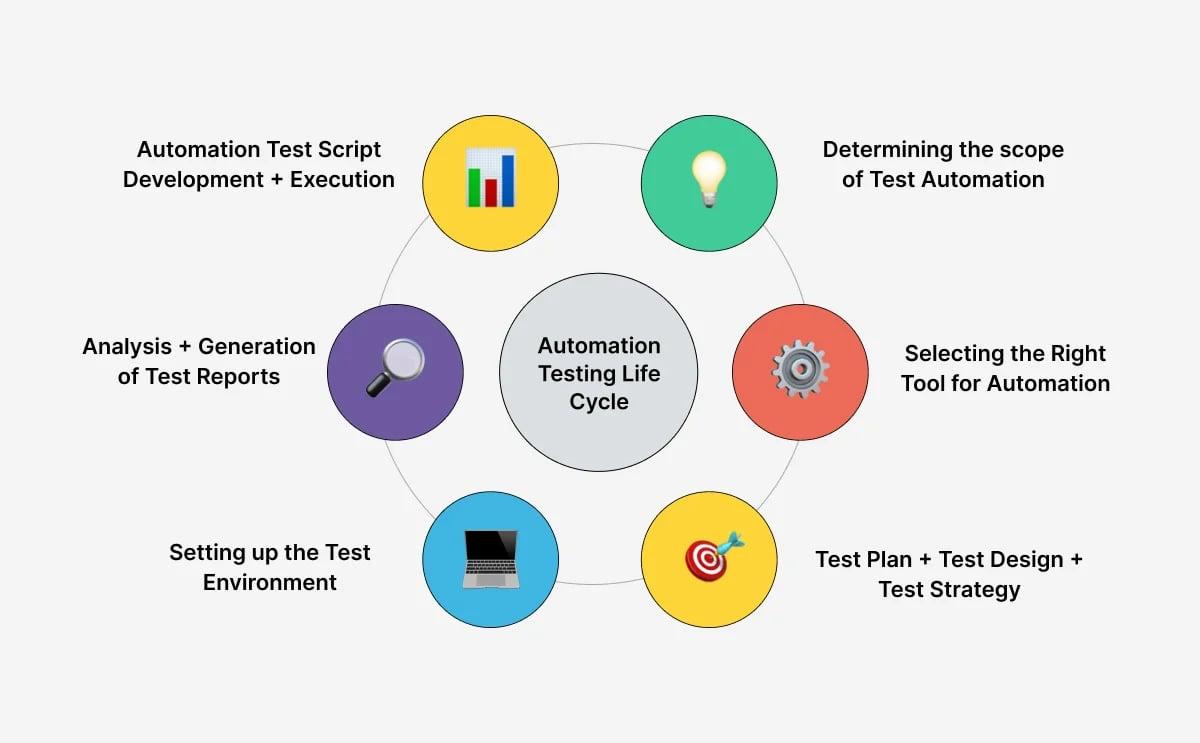
Automation testing has become an essential part of modern software development. With increasing demand for faster releases and better quality, companies are moving from manual testing to automation. If you are new to this field, this step-by-step guide will help you understand how to start automation testing from scratch.
What is Automation Testing?
Automation testing is the process of using tools and scripts to automatically test software applications. Instead of manually checking every feature, automation tools execute test cases and verify results.
This helps save time, reduce human errors, and improve efficiency.
Why Should You Learn Automation Testing?
Automation testing offers several advantages:
- Faster execution of test cases
- Improved accuracy
- Reusability of test scripts
- Better test coverage
- High demand in IT jobs
Because of these benefits, automation testing is one of the most in-demand skills in the software industry.
Step-by-Step Guide to Learn Automation Testing
Step 1: Understand Manual Testing Basics
Before learning automation, you must understand how manual testing works. Learn concepts like:
- Test cases
- Test scenarios
- Bug lifecycle
This foundation is important for writing effective automation scripts.
Step 2: Learn a Programming Language
Automation tools require coding knowledge. Start with:
- Java (most commonly used)
- Python (easy for beginners)
Focus on basics like loops, conditions, and functions.
Step 3: Choose an Automation Tool
Popular tools include:
- Selenium (most widely used)
- Playwright (modern tool)
- Cypress
Selenium is a great starting point for beginners.
Step 4: Learn Selenium Basics
Start with:
- WebDriver setup
- Locators (ID, XPath, CSS)
- Handling web elements
- Writing basic test scripts
Practice simple automation tasks like login testing.
Step 5: Learn Test Frameworks
Frameworks help organize your code. Learn:
- TestNG (for Java)
- PyTest (for Python)
These frameworks help in reporting and managing test cases.
Step 6: Work on Real-Time Projects
Practice is key. Try:
- Automating login forms
- Testing e-commerce websites
- Form validation testing
Real-time projects improve your confidence and skills.
Step 7: Learn Advanced Concepts
Once you are comfortable, move to:
- Data-driven testing
- Page Object Model (POM)
- CI/CD integration
These skills are important for real-world projects.
Common Mistakes Beginners Make
- Skipping manual testing basics
- Not practicing enough
- Focusing only on theory
- Not building projects
Avoiding these mistakes will speed up your learning.
Career Opportunities
After learning automation testing, you can apply for roles like:
- Automation Test Engineer
- QA Analyst
- Software Test Engineer
Automation skills can significantly improve your career growth.
Final Thoughts
Automation testing is a powerful skill that can open many career opportunities. By following a structured approach and practicing regularly, beginners can easily transition into automation roles.
Start with basics, stay consistent, and build real projects to succeed in this field.